
Mission Areas
Five mission areas of expertise, one goal: readiness.
 01
Preparedness should be demonstrated, not assumed.
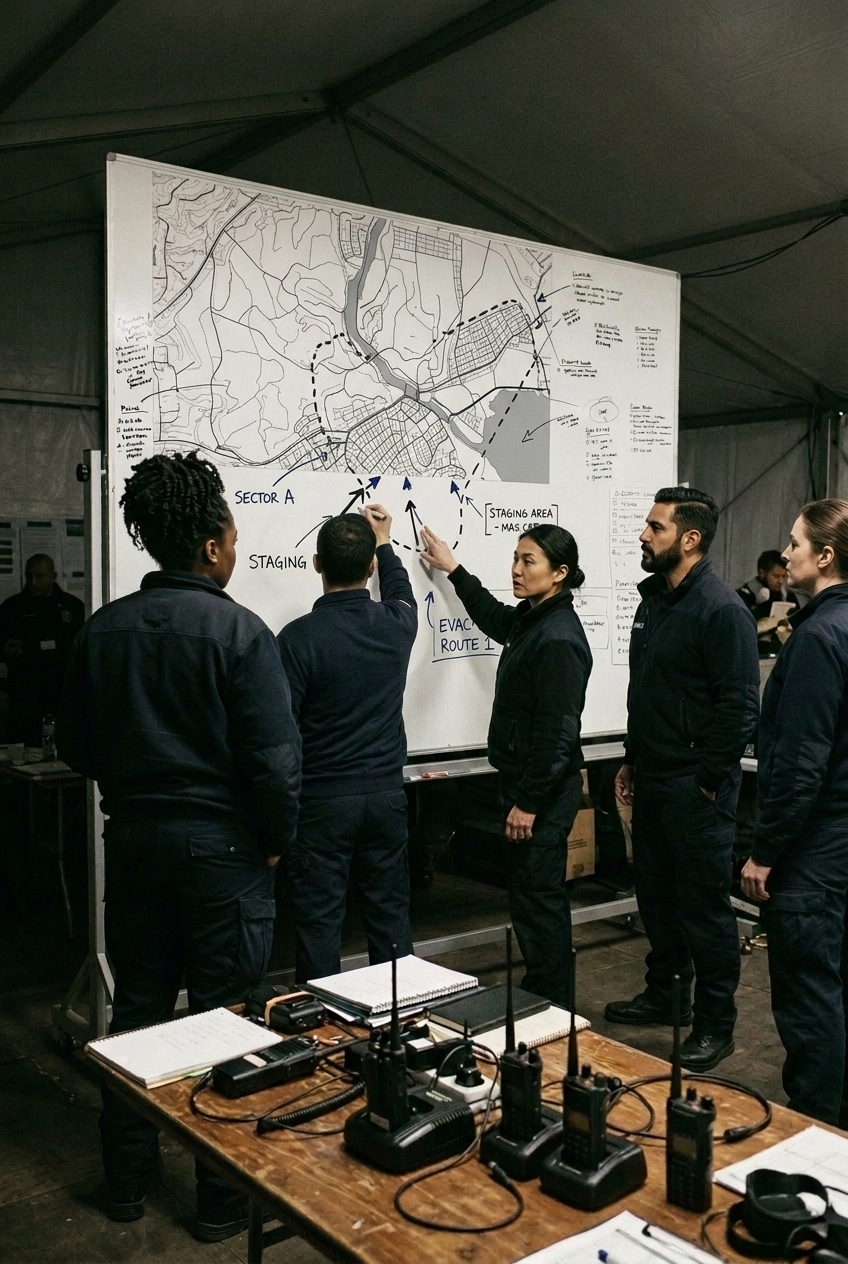
01, Emergency Management & Disaster Preparedness
Preparedness That Performs.
Emergency-management systems are ultimately judged by how they perform when conditions are most demanding.
EM5 helps governments, organizations, and communities strengthen the capabilities required to anticipate hazards, prepare for disruption, respond effectively, and recover from complex emergencies and disasters. We examine the full emergency-management system, governance, authorities, plans, people, resources, facilities, logistics, communications, coordination, and decision-making, to determine whether those elements will work together when needed.
Our approach extends beyond plans and compliance. EM5 helps clients build, exercise, and improve practical capabilities designed for real operating conditions, from routine emergencies to catastrophic and high-consequence events.
Capabilities include
- Emergency preparedness and response planning
- Catastrophic and complex-event planning
- Emergency Operations Centers
- Incident management systems
- Preparedness and capability assessments
- Hazard mitigation
- Disaster logistics
- Recovery planning and frameworks
- Emergency communications and coordination
- Training and exercises
- After-action reviews and improvement programs
 02
Understand the risk. Strengthen the capability. Protect people and the mission.
02, Security & Risk Advisory
Understand Risk. Protect What Matters.
Security and resilience decisions are strongest when risk is understood in the context of mission, operations, dependencies, vulnerabilities, and consequence.
EM5 helps leaders develop a clearer understanding of the risks that can affect people, facilities, infrastructure, operations, and essential missions. Our work connects threat and vulnerability assessment with consequence analysis, operational requirements, and organizational priorities.
The objective is not simply to identify risk. EM5 helps translate assessment into practical decisions about security, preparedness, investment, mitigation, continuity, and resilience, allowing leaders to focus resources where they can have the greatest operational value.
Capabilities include
- Threat, risk, and vulnerability assessments
- Strategic security assessments
- Protective planning
- National Special Security Events (NSSE)
- Critical-infrastructure resilience
- Risk governance
- Dependency and consequence analysis
- Operational risk assessment
- Security and emergency-management integration
- Resilience strategy
- Risk-informed investment prioritization
 03
Plans are the foundation and set the course. Leaders steer the outcome.
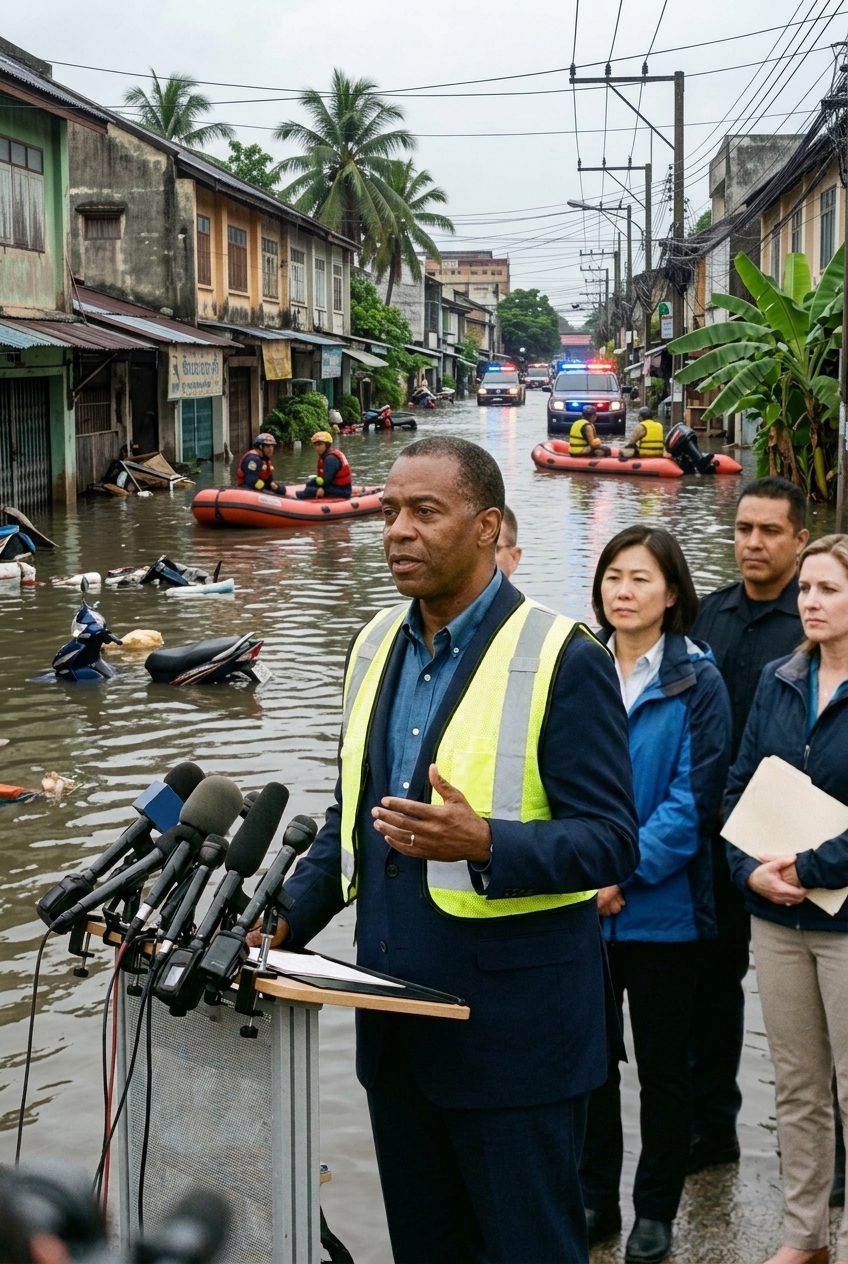
03, Crisis Management & Leadership
When the Plan Ends, Leadership Begins.
Crises compress time, increase uncertainty, and place unusual demands on leaders and institutions. Effective crisis management requires more than a plan, it requires clear authorities, disciplined decision-making, reliable information, and an organization prepared to act under pressure.
EM5 helps executives and crisis teams establish the governance structures, decision processes, information flows, operating rhythms, and coordination mechanisms needed to manage complex and rapidly evolving events.
We also design realistic executive exercises around the decisions leaders are likely to face during consequential events. These exercises test assumptions, authorities, communications, coordination, escalation procedures, and decision-making while identifying practical opportunities for improvement before a real crisis occurs.
Capabilities include
- Crisis governance
- Executive crisis-team design
- Roles, authorities, and decision rights
- Activation and escalation protocols
- Executive decision support
- Strategic communications
- Stakeholder coordination
- Crisis operating rhythms
- Scenario planning
- Executive tabletop exercises
- Crisis simulations
- Post-crisis assessment and improvement
 04
What must continue, what does it depend upon, and how will it be sustained?
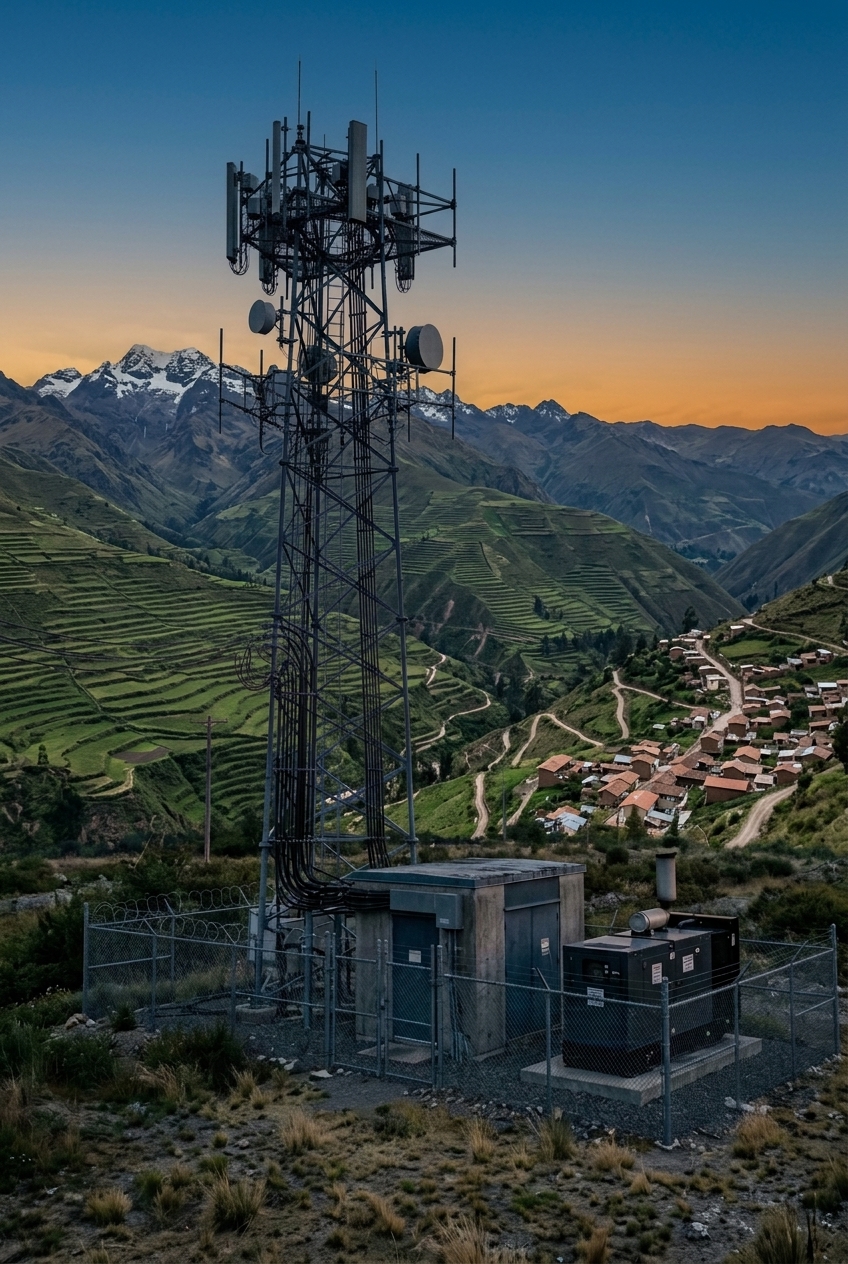
04, Continuity & Operational Readiness
Keep What Matters Running.
Continuity begins with a clear understanding of what an organization must continue to do when normal operating conditions are disrupted.
EM5 helps governments and organizations identify mission-essential and critical functions, understand the people and resources on which those functions depend, and establish practical strategies for sustaining operations through disruption.
Effective continuity connects plans to people, facilities, technology, communications, suppliers, authorities, information, and leadership. EM5 examines these dependencies as an integrated operational system, develops workable alternatives, and helps clients exercise those arrangements before they are required.
Capabilities include
- Continuity of Operations (COOP)
- Business continuity
- Continuity of Government (COG)
- Devolution
- Operational resilience
- Business process analysis (BPA)
- Business impact analysis (BIA)
- Mission-essential and critical-function identification
- Orders of succession
- Delegations of authority
- Alternate operations
- Workforce continuity
- Technology and communications dependencies
- Third-party and supply-chain dependencies
- Reconstitution and return to normal operations
- Continuity training and exercises
 05
Where national strategy becomes operational strength.
05, Government & National Resilience
Building Capability at Scale.
Resilience at institutional and national scale depends on organizations, authorities, infrastructure, people, resources, and systems that can operate together across organizational and geographic boundaries.
EM5 advises governments, international organizations, and strategic partners on the assessment, design, development, and strengthening of emergency-management and resilience capabilities. Our work considers the entire operating system: governance, authorities, organizational structures, Emergency Operations Centers, workforce, training, logistics, communications, early warning, critical infrastructure, recovery systems, and public- and private-sector partnerships.
International experience and comparative benchmarking can provide valuable insight, but effective systems cannot simply be imported from another country or institution. EM5 evaluates proven approaches against local risks, authorities, geography, culture, resources, institutional capacity, and strategic priorities to develop solutions appropriate to the client’s operating environment.
EM5 also supports humanitarian and international operations where effective coordination among governments, international organizations, nongovernmental organizations, private-sector partners, and affected communities is essential to delivering assistance and restoring critical capabilities.
Capabilities include
- National emergency-management systems
- Governance and institutional design
- National preparedness frameworks
- National risk assessment
- Emergency Operations Centers
- Incident-management systems
- Early-warning systems
- Disaster logistics and strategic stockpiles
- Humanitarian assistance and disaster response
- International emergency-management programs
- Institutional capacity building
- Training centers and workforce development
- National exercises
- Recovery and mitigation frameworks
- Critical-infrastructure resilience
- Capability maturity assessments
- International benchmarking